Soil, Size, and Watering: Guidelines for Successful Potted Plants
—Joe Stolkovich is a Master Gardener, owner of a native plant nursery, and longtime Hamilton resident. Ask Joe about your garden concerns! Contact him at hello@Jo-MarAg.com.Every drop of water on Earth has existed since the planet’s formation, so why does it feel like my plants don’t see any of it? A philosophical take on a common question… Plants don’t have a circulatory system like we do. They rely on solute gradients and water pressure to move minerals and sugars throughout the plant. A drop in water pressure, whether from natural drought or simple neglect, can cause lasting damage to both the plant, its flowers and fruit, especially tomatoes and peppers.
Soil dry enough to cause leaf wilting unfortunately leads to blossom end rot in tomatoes. While this is often diagnosed as a calcium deficiency, the issue isn’t the amount of calcium in the soil, it’s the plant’s ability to access it. Without enough water, insufficient dissolved calcium reaches the developing fruit, resulting in that familiar, unsightly damage.
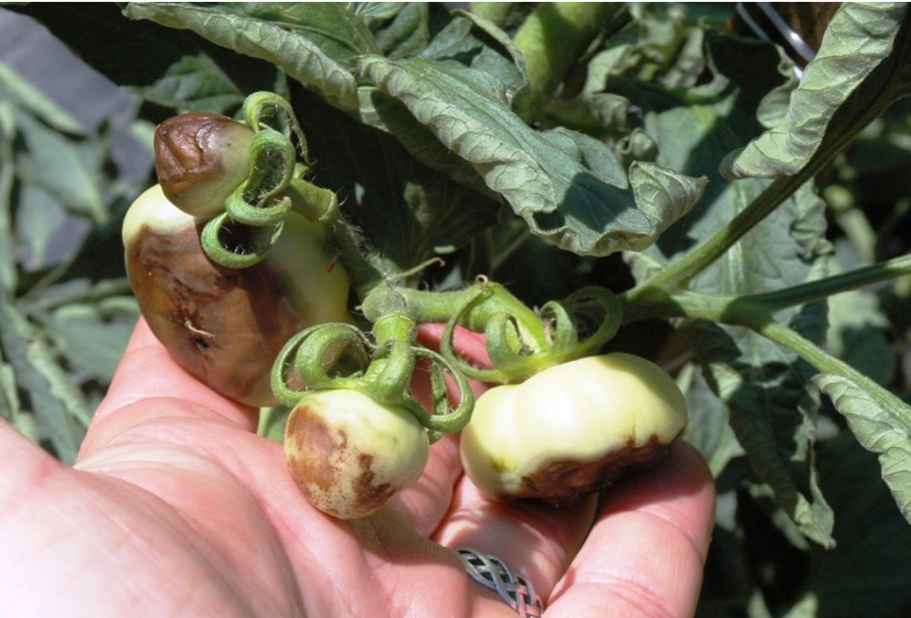
— Blossom end rot on tomatoes
What to do?
First, consider your soil or growing medium. Sandy soils drain quickly and require more frequent attention to maintain adequate moisture. Clay soils retain water but can become hard and restrictive when they dry out. Soil structure can be improved by adding organic matter such as compost. These amendments not only increase moisture retention, but also reduce compaction and improve overall nutrient availability.
Second, if you’re growing in containers, consider the size of the pot. This is especially important for tomatoes. For potted tomatoes, you should use at least a 5-gallon container. Many people assume smaller pots are sufficient for cherry tomatoes, but that’s not the case. While cherry varieties are somewhat more resistant to blossom end rot than larger types, they still require consistent moisture to produce well.
For any potted plant, the goal is to maintain even moisture while still allowing for proper drainage and airflow. Always make sure your containers have adequately sized drainage holes so that roots never sit in standing water. Standing water is hands-down the number one killer of potted plants.
Finally, consider how you’re watering. Plants generally do better with less frequent, but thorough watering rather than frequent, shallow ‘top-offs.’ For in-ground plantings, deeply soaking the soil encourages roots to grow downward to where moisture levels remain more consistent. Frequent light watering encourages root massing near the surface, where moisture is most available after watering. This makes plants more vulnerable during dry spells, since the top layer of soil desiccates first, damaging those shallow roots. Container plants should be watered thoroughly until they drain from the bottom of the pot. This ensures the entire soil column is evenly hydrated and helps flush out any salts that can build up in the potting mix causing harm and that unsightly crusty ring around the top of your container.
Maybe we will get a season with adequate rain so hopefully you won’t have to worry too much about it, but now you know how to respond if we don’t. Have a great summer!