
Keeping Houseplants Happy in Wintertime
—Joe Stolkovich, Master Gardener Class of ’09, is a longtime Hamilton resident and owner of Jo-Mar Ag. LLC, a native plant nursery. Contact him at hello@Jo-MarAg.com.
Cold weather is upon us! Many gardeners are done for the season or maybe wistfully perusing catalogues for next year’s seeds, but the shorter days don’t have to mean an end to verdancy. There are plenty of opportunities to brighten up the winter months with plants!
Keeping houseplants healthy is probably the easiest and best value for your money and effort. No plant really likes it indoors. The low humidity and light levels paired with the moderate temperatures are extremely confusing for your leafy companions. But you can ease their suffering! Placement is key. When picking windows, north-facing spots provide the least amount of sunlight. Eastern and western exposures provide better morning or afternoon lighting, and south-facing openings provide the brightest, day-long sun-light. Plant metabolism is highly temperature dependent, and most of your plants would prefer placement in a cooler room of your house as not to overexert themselves as they stretch to grow under lower indoor winter-light conditions.
Humidity is the other major stressor of houseplants during their winter break. I was amazed at how much healthier my plants became when I began spritzing them with a water atomizer (on the irregular times I remembered my commitment). Indoor cut greenery including garland, wreaths, and Christmas trees also appreciate frequent spritzing.
Speaking of indoor evergreen decorations, the Market’s vendors have many options on sale, but the cheapest are the freebies you make yourself. Holly, magnolia, eastern red cedar, and pine all work well but keep in mind holly is poisonous if you have little ones, pets, or hungry relatives. Decorations don’t stop at wreaths! Tutorials abound for creating festive garland, mini-trees, candle-holders, potpourri, or even a hanging basket or front porch potted arrangement for curb appeal. When the decorations look a little tired in January, reuse the boughs as an insulating mulch over perennial beds.
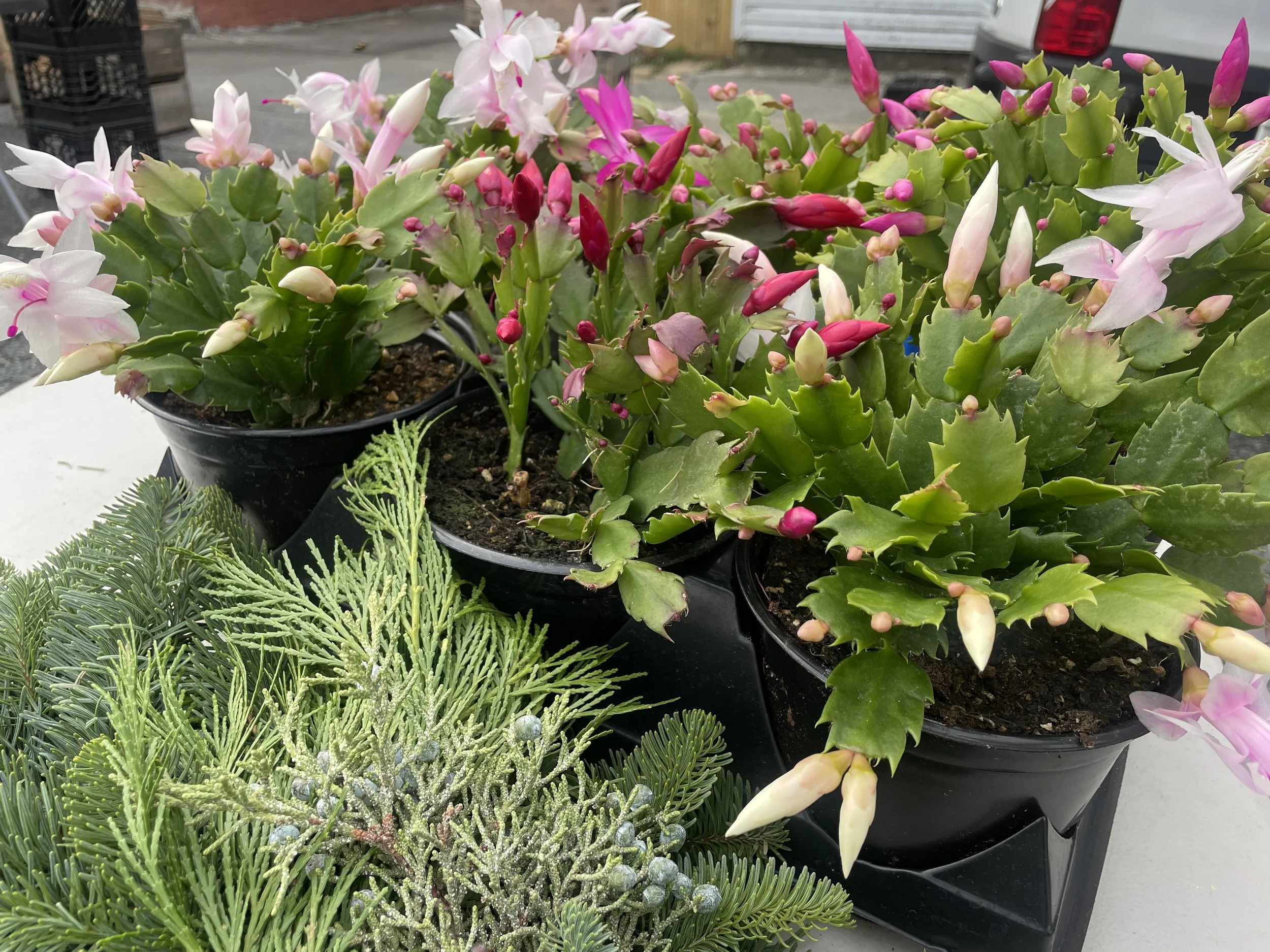
Finally, I can’t overlook Christmas cactus and poinsettia. These two mountain plants love a bright spot in the heat of your house but differ in moisture requirements. The three species of commercially available ‘Christmas cacti’ differ by their flowering time—Easter (Schlumbergera gaertneri), Thanksgiving (S. truncata), and Christmas (S. x buckleyi). These low growing succulents herald from the jungles of Brazil, but will thrive in an east facing Baltimore window with an occasional mist of water. They like to be watered thoroughly, but need a well-draining, cactus type soil to prevent root rot.
Poinsettias on the other hand, can top out at over 13 feet on the hot, dryer, windward mountain slopes off the Pacific coast of Central America, but they also appreciate occasional misting. Water these seasonally colorful shrubs when the top inch of soil is dry; do not let them dry out completely. Be aware of two concerns—the plant is poisonous and the oft-used decorative metallic foil covers can contribute to root rot. Remove the plant from its decorative wrappings when watering and make sure the pot is completely drained to avoid root rot and gnats. Seeing wilted leaves and still watering? That’s root rot! The best next step is to repot, clean up any dead roots, and look forward to bigger display next season.